


Soft Washing vs Pressure Washing: What’s the Difference?
When it comes to exterior cleaning, terms like “soft washing” and “pressure washing” are often thrown around—but they’re not the same thing. While both methods aim to clean surfaces by removing dirt, grime, mould, algae, and stains, the way they go about it is quite different.
If you’re a homeowner or property manager trying to figure out which method is best for your surfaces, understanding the difference between soft washing and pressure washing can save you time, money, and potential damage.
Let’s break it down.
What is Pressure Washing?
Pressure washing—also known as high-pressure cleaning—involves using a high-powered jet of water to remove built-up dirt and contaminants from hard surfaces. Most pressure washers used in professional cleaning services operate at pressures between 1,500 and 4,000 PSI (pounds per square inch), which is strong enough to blast off years of grime.
What is it used for?
Pressure washing is ideal for:
- Concrete driveways and pathways
- Brick walls
- Pavers
- Car parks
- Industrial machinery
- Garage floors
Because it relies on brute force, pressure washing is best suited to durable, hard surfaces that can withstand intense water pressure without risk of damage.
What is Soft Washing?
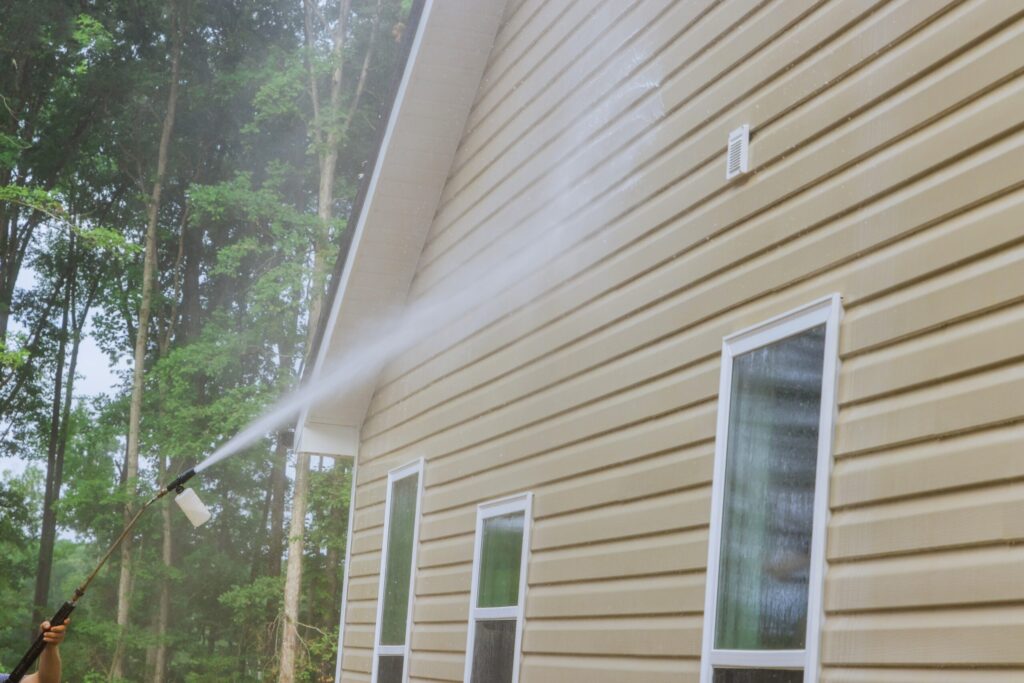
Soft washing, on the other hand, is a gentler cleaning technique that uses low-pressure water combined with specialised cleaning solutions (often biodegradable chemicals) to break down dirt, mould, mildew, and algae. It typically uses equipment that sprays water at less than 500 PSI, which is closer to the pressure you’d get from a garden hose.
What is it used for?
Soft washing is recommended for:
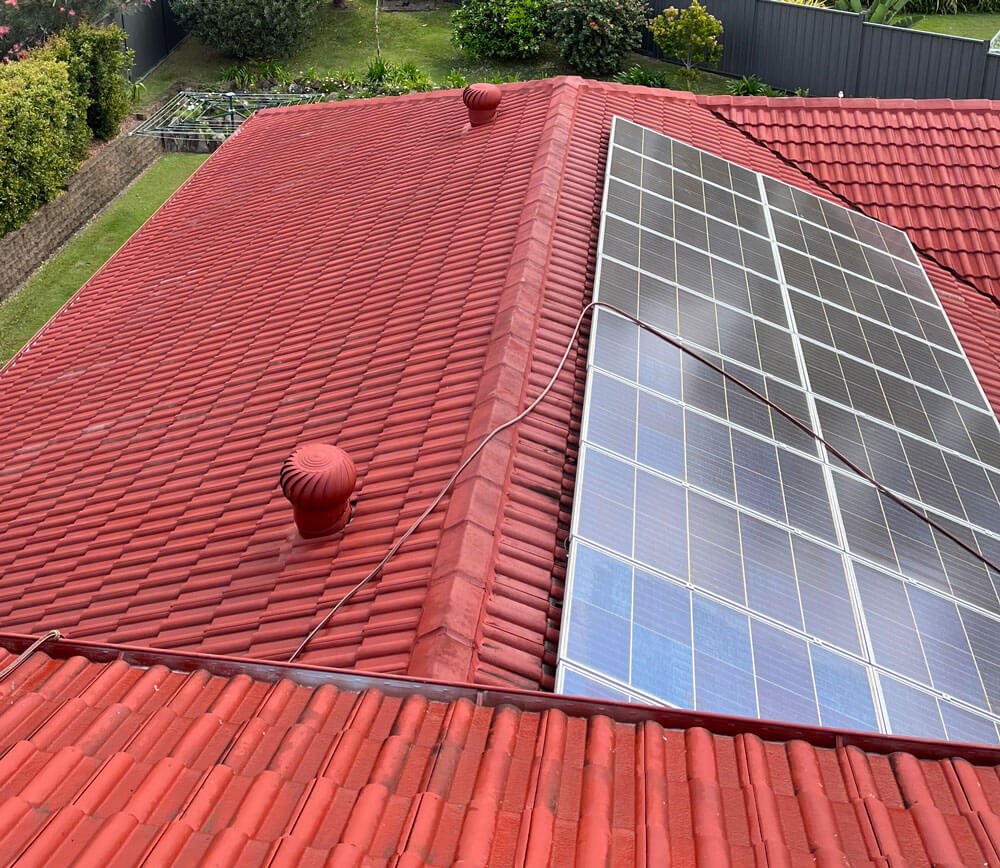
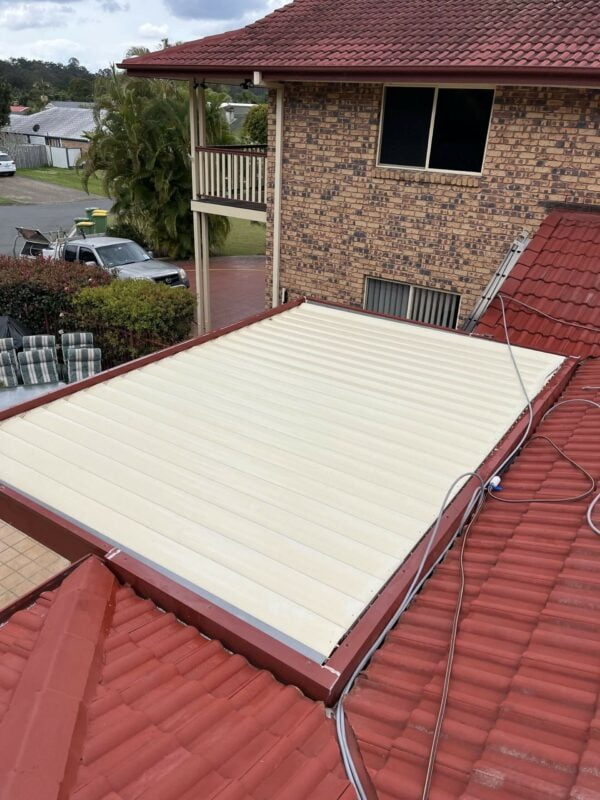
- Roofs (especially tiled or shingle roofs)
- Weatherboard houses
- Painted surfaces
- Outdoor furniture
- Timber decking
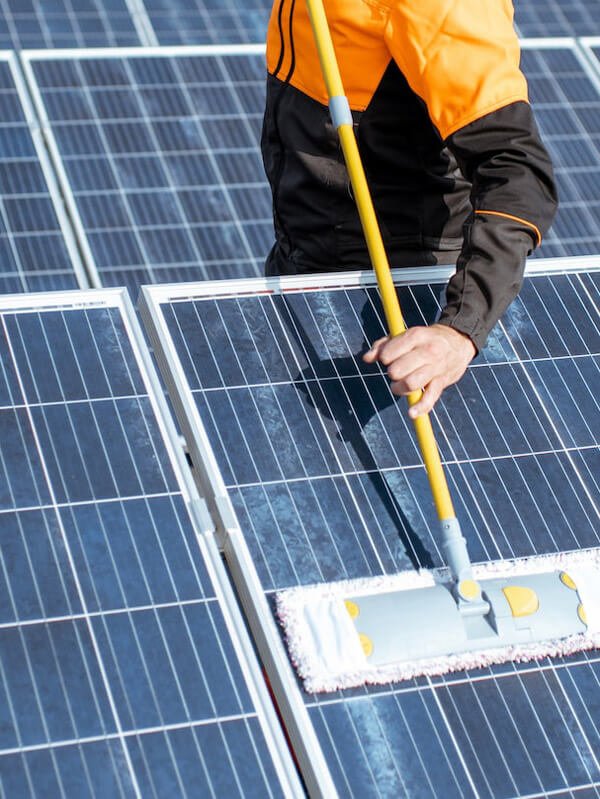
- Solar panels
- Windows and glass balustrades
Because of its gentle nature, soft washing is ideal for delicate or porous surfaces where high pressure could cause damage.
Key Differences at a Glance
| Feature | Pressure Washing | Soft Washing |
|---|---|---|
| Water Pressure | High (1,500–4,000 PSI) | Low (<500 PSI) |
| Cleaning Method | Physical force | Chemical-based |
| Best For | Hard surfaces like concrete & brick | Delicate surfaces like roofs & timber |
| Risks | Can cause etching, paint stripping, or damage | Safer for most surfaces |
| Results | Immediate | May take 24–48 hours for full effect |
Why Does the Difference Matter?
Choosing the wrong method can have serious consequences. For example:
- Using high pressure on a roof can crack tiles, lift shingles, or strip protective coatings.
- Soft washing a driveway may not have enough force to remove deep-set grime or oil stains.
Understanding the material and condition of the surface is essential before deciding how to clean it.
Environmental Considerations
Both soft washing and pressure washing have environmental impacts, but there are ways to minimise them:
- Soft washing typically uses chemicals, so it’s important to choose eco-friendly, biodegradable solutions and to control runoff.
- Pressure washing uses more water, but doesn’t require chemicals for basic cleaning tasks.
A professional cleaning service will know how to manage both methods responsibly, ensuring compliance with local council regulations and environmental standards.
Can You DIY These Methods?
While pressure washers are widely available for hire from Bunnings and other hardware stores, many homeowners underestimate how powerful they are. If misused, pressure washers can:
- Damage surfaces
- Break skin
- Force water behind cladding or into cavities
Soft washing, on the other hand, may seem safer—but handling chemicals without the right safety gear and dilution ratios can be risky.
For best results, and to avoid accidents or damage, it’s worth hiring a professional with experience in both methods and the right equipment for the job.
Which Method is Right for You?
The answer depends entirely on what you’re trying to clean:
- Got a filthy concrete driveway? Pressure washing is your go-to.
- Roof covered in mould or lichen? Soft washing is safer and more effective.
- Preparing your home for sale? A mix of both techniques might be used—pressure washing for paths and fencing, soft washing for the house and roof.
A reputable exterior cleaning company will assess your property and recommend the best method—or a combination of both—to get the job done safely and effectively.
Final Thoughts
At the end of the day, soft washing and pressure washing are two powerful tools, each with their own strengths and ideal use cases. Understanding the difference helps you make informed choices about how to maintain your home or commercial property.
If you’re unsure which method is best, speak to a local professional. They’ll be able to assess your surfaces, explain the pros and cons, and deliver results that not only look great—but last longer too.